IMDEA Networks



RAGs to Riches: Dual-Blind Retrieval and Influence Calculation for Distributed RAG
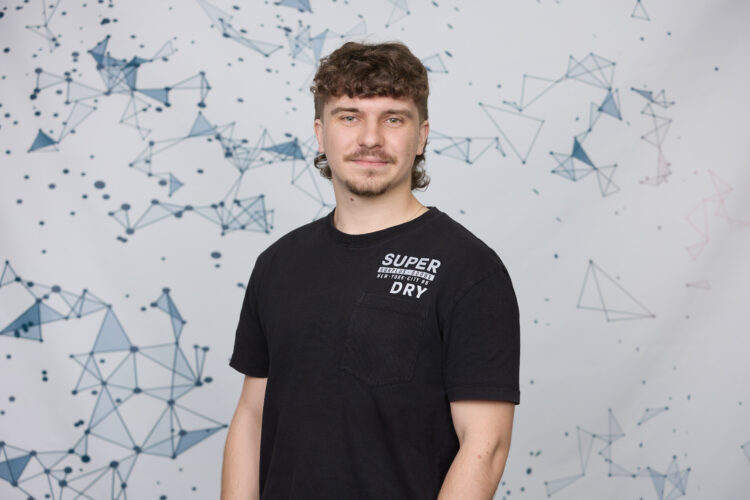
Alexandr Goultiaev Tolstokorov, PhD Student at IMDEA Networks Institute, Madrid, Spain
In-house Presentation
Retrieval-Augmented Generation (RAG) grounds large language models in relevant information, but tapping third-party proprietary data remains challenging: providers hesitate to share sensitive documents without strong privacy assurances, users need query confidentiality, and fair compensation requires measuring each document’s contribution. We introduce Dual-Blind RAG, an end-to-end protocol that (i) performs decentralized, document-private and query-private retrieval, and (ii) attaches a one-shot Shapley-faithful influence score to every used document.
Our retrieval pipeline is privacy-aware yet aggressively sublinear: it combines (i) PrivHash-perturbed SimHash screening, (ii) distributed top-candidate pruning, and (iii) CKKS homomorphic re-ranking over a small candidate set, so >95% of computation occurs on sublinear buffers. The protocol never discloses raw embeddings, leaks at most the inevitable “which of my documents were retrieved” to each provider, and composes across mutually distrustful providers. To compensate sellers, we propose Weighted Optimal-Transport Influence—a single-pass metric that weights semantic OT distance by cross-attention that achieves 0.915 NDCG@5 vs Shapley ranking.
On MS MARCO, Dual-Blind RAG matches a plaintext dense retriever within 3 MRR@10 points and <8 nDCG@10, while existing private-search baselines either leak embeddings or incur 10–100x more computation. Our results show that strong privacy, fair attribution, and competitive quality can coexist—providing the missing primitives for practical third-party RAG markets.
About Alexandr Goultiaev
Alexandr is a second-year PhD researcher at IMDEA Networks Institute (+UC3M). His main area of research revolves around federated learning, data economy, data valuation and Retrieval-Augmented-Generation (RAG) for Large Language Models (LLMs) in distributed settings. Before his PhD, Alexandr earned an MSc in Electronic Engineering at Trinity College Dublin, where he investigated parameter shift in Federated Learning deployments which gave way to his current focus on the data economy and its distributed infrastructure.
This event will be conducted in English