IMDEA Networks



Hierarchical Inference with Delayed Feedback
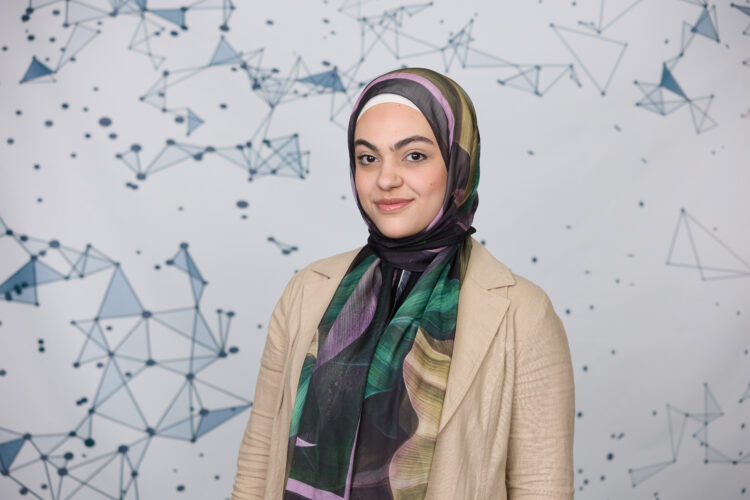
Ghina Al Atat, Estudiante de doctorado en IMDEA Networks Institute, Madrid, España
In-house Presentation
Modern edge AI systems increasingly rely on hierarchical inference: a compact on-device model runs first, and only uncertain inputs are offloaded to a powerful remote server. Existing algorithms for learning this offloading policy assume that remote feedback arrives instantly — an assumption that breaks down in real wireless networks, where delays can be large, correlated, and heavy-tailed.
In this talk, I will present HILD, a new online learning problem that explicitly models feedback delay as part of the user-perceived cost. I will introduce HIDE-P, an algorithm based on a preemption technique that avoids waiting indefinitely for delayed responses, and derive distribution-specific regret bounds for bounded, exponential, and Pareto delay models. For the fully practical setting where the delay distribution and time horizon are both unknown, I will present HIDE-P-Adaptive, which estimates an effective preemption threshold from censored delay observations using the Kaplan-Meier estimator and operates with an anytime learning rate. Experiments on three image classification datasets show that HIDE-P-Adaptive achieves the lowest cumulative loss among all baselines, reducing average inference delay by up to 98% compared to full offloading and up to 91% compared to the best prior algorithm, with the largest gains under heavy-tailed delays.
About Ghina Al Atat
Ghina Al Atat is a predoctoral researcher in the Opportunistic Architectures Lab (OAL) at IMDEA Networks Institute, supervised by Dr. Vincenzo Mancuso, and a final-year PhD candidate in Telematics Engineering at UC3M. Her research focuses on Edge AI systems and online learning for wireless networks, with an emphasis on adaptive inference algorithm design and the performance evaluation of distributed AI systems. Prior to her PhD, Ghina earned an MSc in Computational Science and a BSc in Physics from the American University of Beirut, Lebanon.
Este evento se impartirá en inglés